How Much Does a Web Application Cost in 2026?
“How much does a website cost?” Every business owner asks this question sooner or later. And the honest answer is: it depends. But “it depends” isn’t useful, so here are concrete price ranges based on real projects.
This article is for small and medium business owners who want to know what to expect before they even talk to developers. No technical jargon, no hidden agenda. Just real numbers.
Three categories, three price ranges
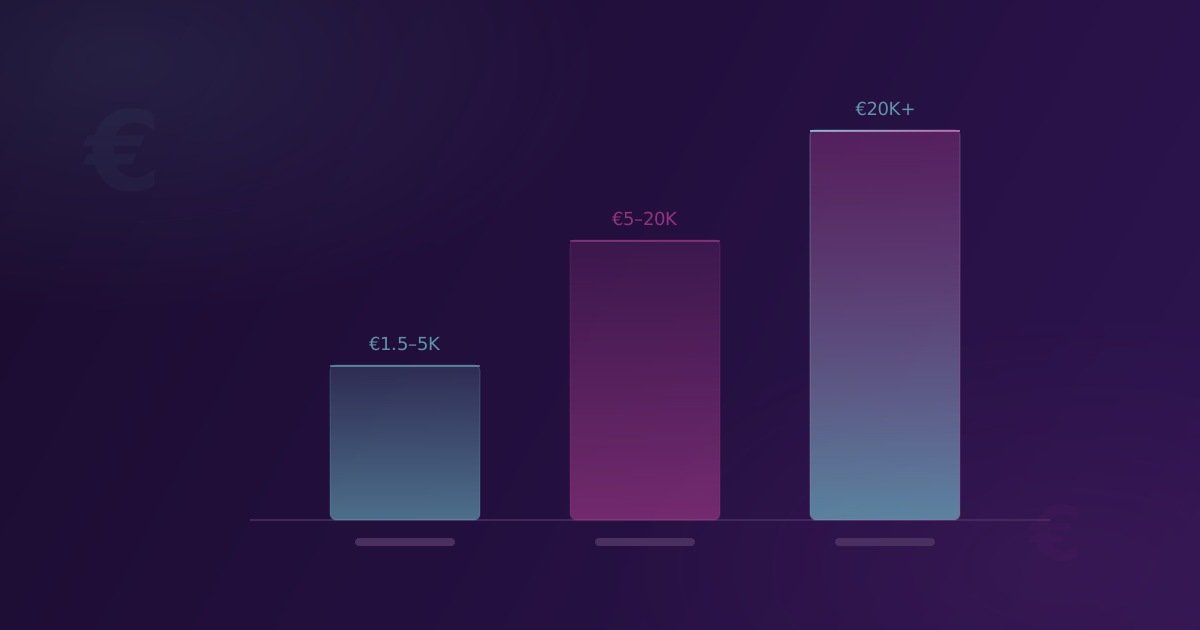
1. Business website (5–10 pages): €1,500 – €5,000
A standard site with a homepage, about page, services, contact, and maybe a blog. Responsive design, basic SEO, contact form.
For most small businesses, this is more than enough. At the lower end, you get a functional solution with a clean design. At the upper end, you get a custom design, multilingual support, Google Maps integration, and analytics setup.
2. Web application with user accounts: €5,000 – €20,000
This goes beyond a regular website. Users log in, they have a dashboard, there’s some business logic: a booking system, CRM, internal order management tool, or client portal.
The price depends mostly on how complex that business logic is. A simple system with registration and one module sits closer to €5,000. A system with multiple user roles, reporting, and third-party integrations moves toward €15,000–€20,000.
3. Complex platform (SaaS, marketplace, multi-tenant): €20,000+
Platforms like online marketplaces, SaaS products, or systems serving multiple clients simultaneously are projects that take months. Here, €20,000 is a starting point, and realistic custom software development costs for such projects often exceed €50,000.
What affects the price?
Four things have the biggest impact:
- Number of features: every new feature (payments, notifications, reports) adds time and cost
- Design: a custom design from scratch costs more than adapting an existing template
- Integrations: connecting with payment systems, ERP, CRM, or third-party APIs
- Content: copy, photos, and translations are your responsibility, but if you don’t have them, that’s an additional cost
Hidden costs people forget
The build price is just the beginning. Every website or application has ongoing costs:
- Hosting: €10–€100 per month, depending on complexity
- Domain: €10–€20 per year
- SSL certificate: free (Let’s Encrypt) or €50–€200 per year for advanced options
- Maintenance and security updates: €50–€200 per month
- Content updates: depends on how often you change things
When you add up all ongoing costs, look at the total cost of ownership over 3 years, not just the initial investment.
The “cheap website” trap
A €300 website exists. So does a €500 car, and both will end up costing you more than you saved.
Typical problems: generic design that looks like thousands of other sites, poor SEO, zero support after delivery, and slow performance that drives visitors away.
Template vs. custom: a 3-year comparison
Many website-builder SaaS tools (Wix, Squarespace) charge €20–€50 per month. That sounds cheap, but over three years you’ll pay €720–€1,800, and you don’t own the code, you’re limited to their capabilities, and you’re dependent on their pricing, which can increase.
A custom solution at €3,000–€5,000 is a bigger upfront investment, but it’s yours. No monthly platform subscription, full control, and you can adapt it as your business grows.
How to get the most value
Three practical tips:
- Start with an MVP: launch the simplest version that solves your core problem. Upgrades come later, once you have real user feedback.
- Prioritize ruthlessly: list everything you want, then split it into “must have” and “nice to have.” Focus your budget on the first list.
- Prepare content upfront: copy, photos, and your logo. Projects are delayed most often because content isn’t ready, and waiting costs money.
Free consultation: define the scope before committing to a price
The best way to get a realistic estimate? Talk to someone who will listen first and quote second.
At TechCraft, every project starts with a free consultation. We define what you actually need, suggest the best approach, and give you a transparent quote with no hidden costs. Get in touch and find out what your project would really cost.
Related Posts

Custom Website vs. Template
Template websites seem cheap, but hidden costs add up fast. Learn why custom website development is a smarter investment for your business.

Why One Small Detail Can Cost You Clients
A 1969 psychology experiment explains why one small sign of neglect, an outdated website or an unanswered email, can quietly destroy client trust.